When your car breaks down, the truck that shows up matters more than most people realize. The wrong one can damage an AWD drivetrain, scratch a low bumper or struggle with a vehicle stuck in a ditch. Knowing the main types of tow trucks helps you ask for the right one.
So, what are the different types of tow trucks? The seven you’ll see most often are flatbed (rollback), wheel-lift, integrated, boom, hook and chain, self-loader and rotator tow trucks. Each one has its own style of lifting and moving a vehicle, and each fits different jobs, from towing a compact car downtown to recovering a bus from a highway ditch. People also call them wreckers, recovery vehicles or breakdown trucks.
Need a tow in Ottawa right now? Call Ontario Towing at (613) 619-4545 for 24/7 tow truck service in Ottawa.
Types of Tow Trucks at a Glance
| Type of Tow Truck |
How It Works |
Best For |
| Flatbed (rollback) |
The bed tilts down, and the vehicle is driven or winched on |
AWD, EV, luxury, damaged and non-running vehicles |
| Wheel-lift |
A hydraulic yoke lifts two wheels |
Everyday cars, tight spaces, short local tows |
| Integrated |
A boom and wheel-lift built into one heavy chassis |
Buses, large trucks and heavy vehicles |
| Boom |
A crane arm with a winch lifts or pulls the vehicle |
Recovery from ditches, embankments and hard-to-reach spots |
| Hook and chain |
Chains wrap the axle or frame, and the vehicle is lifted by a hook |
Wrecked or junk vehicles only |
| Self-loader (repo truck) |
A wheel-lift controlled from inside the cab |
Repossessions and parking enforcement |
| Rotator |
A heavy boom that rotates 360 degrees |
Major heavy-duty crashes and recoveries |
1. Flatbed Tow Truck (Rollback)
A flatbed tow truck has a long, flat bed that hydraulically tilts and slides to the ground, forming a ramp. Your vehicle is driven up or winched onto the bed, then strapped down at all four wheels. Because no wheel touches the road, a flatbed is the safest way to move AWD, 4×4, electric, luxury and accident-damaged vehicles. You may also hear it called a rollback or a flat deck tow truck.
Need one in Ottawa? See our flatbed towing service.
Types of Flatbed Tow Trucks
Not every flatbed is the same. The most common types of flatbed tow trucks include:
- Standard rollback: a single-car bed that tilts and slides back. This is the everyday flatbed for cars and SUVs.
- Flatbed with a wheel-lift: a rollback with a wheel-lift under the rear, so one truck can carry one vehicle on the bed and tow a second behind it.
- Extended or heavy-duty bed: a longer, stronger bed for pickups, vans and small commercial vehicles.
- Car carrier: a multi-level truck that moves several vehicles at once, mostly used by dealerships and auctions.
2. Wheel-Lift Tow Truck
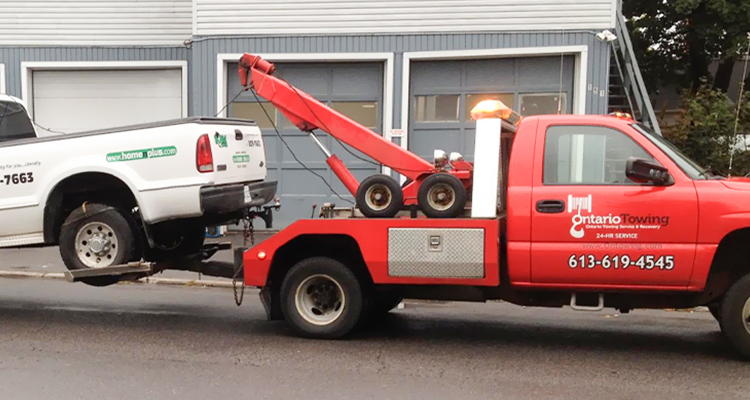
A wheel-lift tow truck uses a hydraulic arm with a metal yoke that cradles two wheels, front or rear, and lifts that end off the ground. The other two wheels roll behind the truck. Since nothing touches the bumper or body, it’s much gentler than the old hook and chain method. Wheel-lifts are compact and quick, which makes them ideal for narrow streets, driveways and underground garages.
Not sure whether you need a flatbed or a wheel-lift? Read flatbed vs wheel-lift tow trucks.
3. Integrated Tow Truck
An integrated tow truck, sometimes called an integrated wrecker, has its boom and wheel-lift built directly into the truck’s chassis instead of bolted on. That gives it extra strength and stability for heavy loads. These are among the most common types of wrecker trucks used for buses, large commercial trucks and other heavy-duty vehicles. Smaller, light-duty integrated units are also used to pick up parked cars quickly.
4. Boom Tow Truck
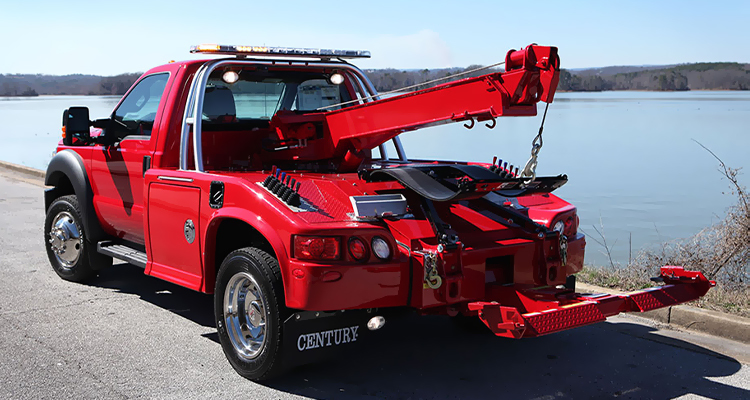
A boom tow truck has a crane-style arm (the boom) and a winch cable. Instead of driving up to the vehicle, the operator can extend the boom to lift or pull a vehicle out of a ditch, snowbank, embankment or other spot a regular tow truck can’t reach. Some booms are fixed, while others can extend and swivel. Boom trucks are mainly used for recovery, and the vehicle is often moved onto a flatbed afterward.
For vehicles stuck in snow or ditches around Ottawa, see our winch out service.
5. Hook and Chain Tow Truck
The hook and chain tow truck is the oldest design. Chains are wrapped around the vehicle’s axle or frame, and a hook lifts one end while the other rolls on the road. Because the chains can scratch bumpers, bend parts and affect alignment, most towing companies no longer use hook and chain for regular cars. Today you’ll mostly see it used for wrecked vehicles or junk cars headed for the scrapyard.
6. Self-Loader (Repo Truck)
What is a repo truck called? Most are self-loaders: light-duty trucks with an integrated wheel-lift that the driver controls from inside the cab. The operator can back up, grab a parked vehicle and drive away in seconds without stepping out. That speed is why self-loaders are popular for repossessions and private property parking enforcement.
7. Rotator Tow Truck
A rotator is the heaviest of all tow truck styles. Its boom can rotate a full 360 degrees and lift enormous weight, so operators can recover overturned tractor-trailers, buses and other heavy vehicles from almost any angle. You’ll usually only see a rotator at a major highway crash or a complex heavy recovery.
Tow Truck Classes: Light, Medium and Heavy-Duty
Besides their style, tow trucks fall into three classes based on how much weight they can handle. These are the three types of tow trucks most towing companies talk about:
- Light-duty tow trucks handle passenger cars, SUVs, minivans, motorcycles and small pickups, roughly up to 10,000 lbs. Most flatbeds, wheel-lifts and self-loaders are light-duty.
- Medium-duty tow trucks handle box trucks, delivery vans, larger pickups and RVs, roughly up to 26,000 lbs.
- Heavy-duty tow trucks handle tractor-trailers, buses, dump trucks and construction equipment. Integrated wreckers and rotators work in this class.
Types of Tow Trucks for Cars
If you drive a regular car, SUV or minivan, you’ll almost always see one of three types of tow trucks:
- Flatbed (rollback): the safest choice for AWD, electric, luxury and damaged cars.
- Wheel-lift: quick and compact, good for everyday two-wheel-drive cars and tight spaces.
- Self-loader: a light-duty wheel-lift used mainly for parking enforcement and repossessions.
Heavier trucks like integrated wreckers and rotators are built for buses and semis, so you won’t need one for a car.
Which Tow Truck Is Best for Your Vehicle?
There’s no single “best tow truck.” The best one is the truck that fits your vehicle and situation:
- AWD, 4×4 or electric vehicle: flatbed. See AWD towing and EV towing.
- Everyday front- or rear-wheel-drive car on a short trip: wheel-lift or flatbed.
- Car in an underground garage or tight driveway: wheel-lift. See underground parking towing.
- Vehicle stuck in a ditch or snowbank: a winch or boom recovery, then a tow.
- Crashed or non-running vehicle: flatbed. See accident towing.
- Company vans and box trucks: a medium-duty truck. See fleet towing.
You don’t need to figure this out alone. A good dispatcher asks about your vehicle and location, then sends the right truck.
Tow Truck vs Wrecker, Rollback, Repo Truck and Car Carrier
People use these names in different ways, so here’s what each one usually means:
- Tow truck vs wrecker: “wrecker” usually means a tow truck with a boom and wheel-lift built for recovery, especially heavier integrated units. In everyday speech, many people call any tow truck a wrecker.
- Tow truck vs flatbed: a flatbed is a type of tow truck that carries the whole vehicle on a bed. A regular tow truck (wheel-lift) lifts only two wheels.
- Tow truck vs rollback: a rollback is just another name for a flatbed tow truck.
- Tow truck vs repo truck: a repo truck is usually a self-loader, a light-duty wheel-lift truck that can pick up a parked car in seconds.
- Tow truck vs car carrier: a tow truck moves one disabled vehicle at a time. A car carrier moves several working vehicles, usually for dealerships.
The Tow Trucks Ontario Towing Uses in Ottawa
Ontario Towing has been towing vehicles across Ottawa since 1999, and more than 760 drivers have rated us 5.0 on Google. Our fleet runs flatbed and wheel-lift tow trucks for light and medium-duty vehicles, with winch-equipped recovery for vehicles stuck in snow and ditches. We don’t provide heavy-duty towing.
When you call (613) 619-4545, our dispatcher asks what you drive and where you are, then sends the right truck, flatbed or wheel-lift, with the price and arrival time confirmed on the phone. For any tow truck service in Ottawa, one call gets the right truck moving, day or night.
Frequently Asked Questions
What are the main types of tow trucks?
The main types of tow trucks are flatbed (rollback), wheel-lift, integrated, boom, hook and chain, self-loader and rotator. Flatbeds and wheel-lifts are the most common for everyday cars.
What is the most common type of tow truck?
For cars and SUVs, flatbed and wheel-lift tow trucks are the most common. Flatbeds are increasingly preferred because they keep all four wheels off the road.
What are the two main types of tow trucks?
For everyday cars, the two main types are flatbed tow trucks, which carry the whole vehicle on a bed, and wheel-lift tow trucks, which lift two wheels while the other two roll.
What are the different types of towing?
The main types of towing are flatbed towing, wheel-lift towing, dolly towing (a wheel-lift with dollies under the other two wheels), hook and chain towing and heavy-duty towing with integrated wreckers or rotators. For cars, flatbed and wheel-lift towing are the most common.
What is a regular tow truck called?
A regular tow truck is usually a wheel-lift tow truck. Many people also call it a wrecker, especially when it has a boom.
What kind of truck is a tow truck?
A tow truck is a truck chassis fitted with towing equipment, such as a tilting bed, a wheel-lift, a boom or a winch. Light-duty tow trucks are often built on medium-sized truck frames, while heavy-duty wreckers use large commercial chassis.
What is the difference between a tow truck and a wrecker?
“Wrecker” usually refers to tow trucks with a boom and wheel-lift, especially heavier integrated units built for recovery. In everyday use, many people call any tow truck a wrecker.
Is a rollback the same as a flatbed?
Yes. Rollback, flatbed and flat deck all describe a tow truck with a bed that tilts and slides back for loading.
Why don’t towing companies use hook and chain anymore?
Chains around the axle or frame can scratch bumpers, bend parts and throw off alignment. Wheel-lifts and flatbeds move vehicles much more safely, so hook and chain is now mostly used for wrecks and scrap vehicles.
What is slang for a tow truck?
Common nicknames include wrecker, rollback (for flatbeds) and hook. Repo trucks are often called self-loaders.